Who killed the Monobloc Chair?

100^70^70
plastic,paper
The Monobloc plastic chair is one of the most common objects in the world.
It can be found on street corners, in small shops, on building sites, in schools, in hospitals and in countless homes. It is cheap, ordinary and ubiquitous, and for that very reason, it rarely attracts any real attention.
I have always felt that this chair bears a certain resemblance to the people who produce it.
Both are born on an assembly line, are constantly used and worn down, and are always ready to be replaced.
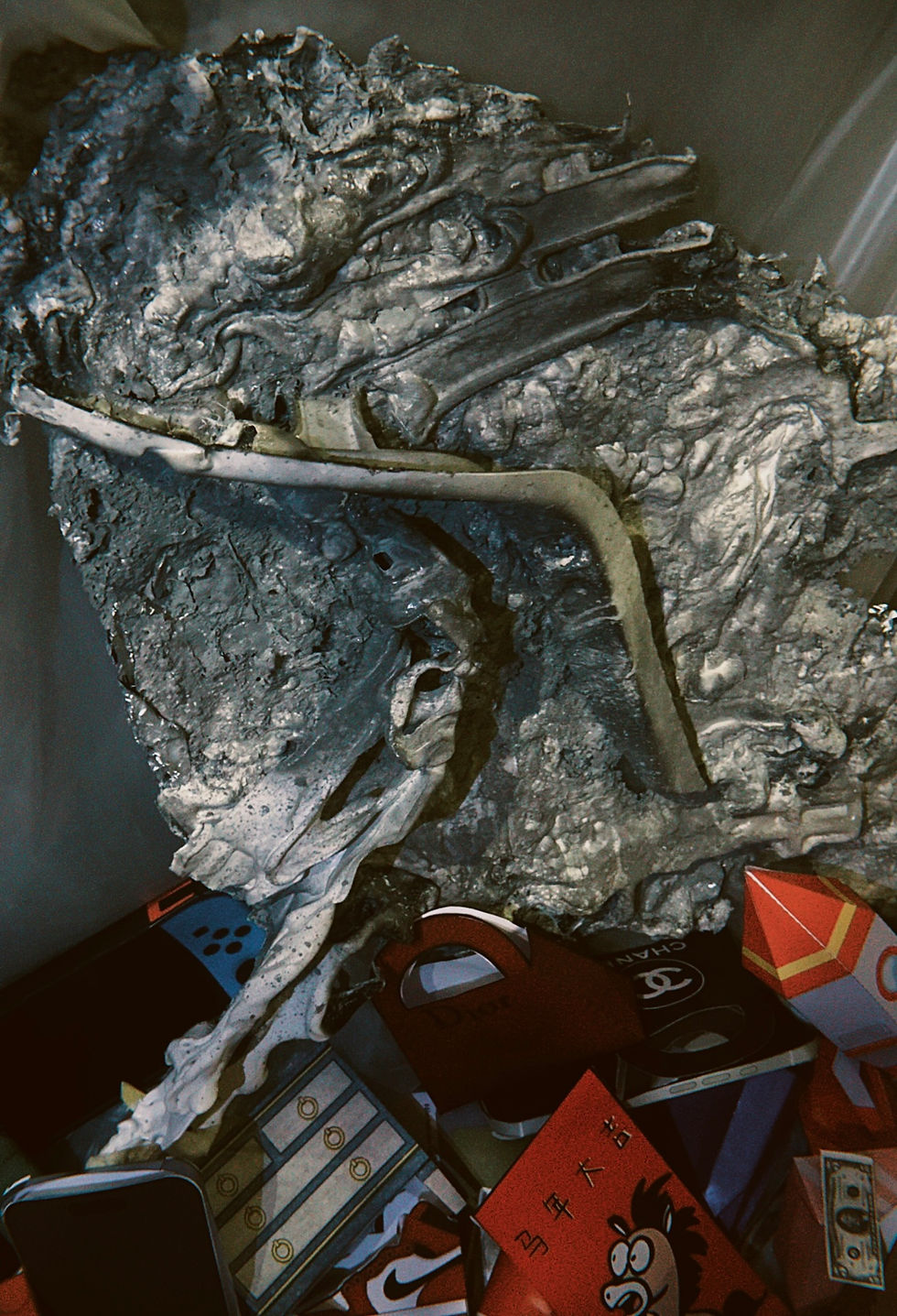
During the creative process, an accident caused the plastic chair to burn completely and collapse. It lost its original function and form, leaving only a faintly discernible outline. The surface, covered in ash, resembles a fossil freshly unearthed, or perhaps the remains of something left behind by the times.
The paper consumer goods arranged around it are inspired by the paper offerings found in traditional Chinese funeral customs. Mobile phones, luxury goods, packaging boxes and the like symbolise the desires that modern society ceaselessly produces and pursues. They resemble both a weight pressing down upon the chair and burial offerings laid before it.
My intention is not to criticise any specific form of consumer behaviour, but rather to explore the sense of weariness that pervades contemporary society.
In an era that emphasises efficiency, renewal and competition, people are constantly worried about being phased out or replaced. We strive to maintain our own value, yet we frequently feel our own fragility and replaceability.
This plastic chair has ultimately become a corpse.
And those objects that once promised happiness, success and a sense of identity now surround it.
They are both the murderers who killed it and its burial offerings.